Adsonant vs Duolingo
Duolingo Alternative for Building Vocabulary
Updated
Adsonant is built for helping you capture and grow your vocabulary in a language. It’s where you keep the words you meet in shows, books, and conversations, with translations, readings, and example sentences filled in, beyond the words a Duolingo course teaches. Duolingo is a fun way to build a daily habit, and for some learners it’s the better choice.
The short answer
- Choose Adsonant if you want to quickly collect and review vocabulary without spending a lot of time building flashcard decks.
- Choose Duolingo if you want a gamified course that builds a daily habit, with grammar, listening, and speaking included.
Adsonant vs Duolingo at a Glance
| Adsonant | Duolingo | |
|---|---|---|
| Best for | Building vocabulary in a new language | A daily habit with gamified lessons |
| Adding a word | Type a word, paste text, or take or choose a photo | Not possible; you learn the course’s words |
| Translations, readings, examples | One tap: meaning, example sentence, pinyin or hiragana, and noun articles | Shown in lessons |
| Spaced repetition | FSRS, plus review by group or recently added words | Practice tab reviews words and mistakes |
| Statistics | Total words by language, growth over time, daily activity, and review history | Streaks, XP, and leagues |
| Organizing words | Groups; a word can belong to several | Units in a fixed course |
| Ready-made content | None, you build your personalized collections | Full courses in 40+ languages |
| Languages | Chinese, French, German, Italian, Japanese, Spanish | 40+ |
| Platforms | iPhone and iPad, synced with iCloud | Web, iPhone, Android |
| Price | Free for small collections, paid subscription thereafter | Free tier with ads; Super and Max subscriptions |
Adding a Word: Adsonant vs Duolingo
Say you hear the Japanese word 木漏れ日 (こもれび, sunlight through trees) and want to learn it.
In Adsonant
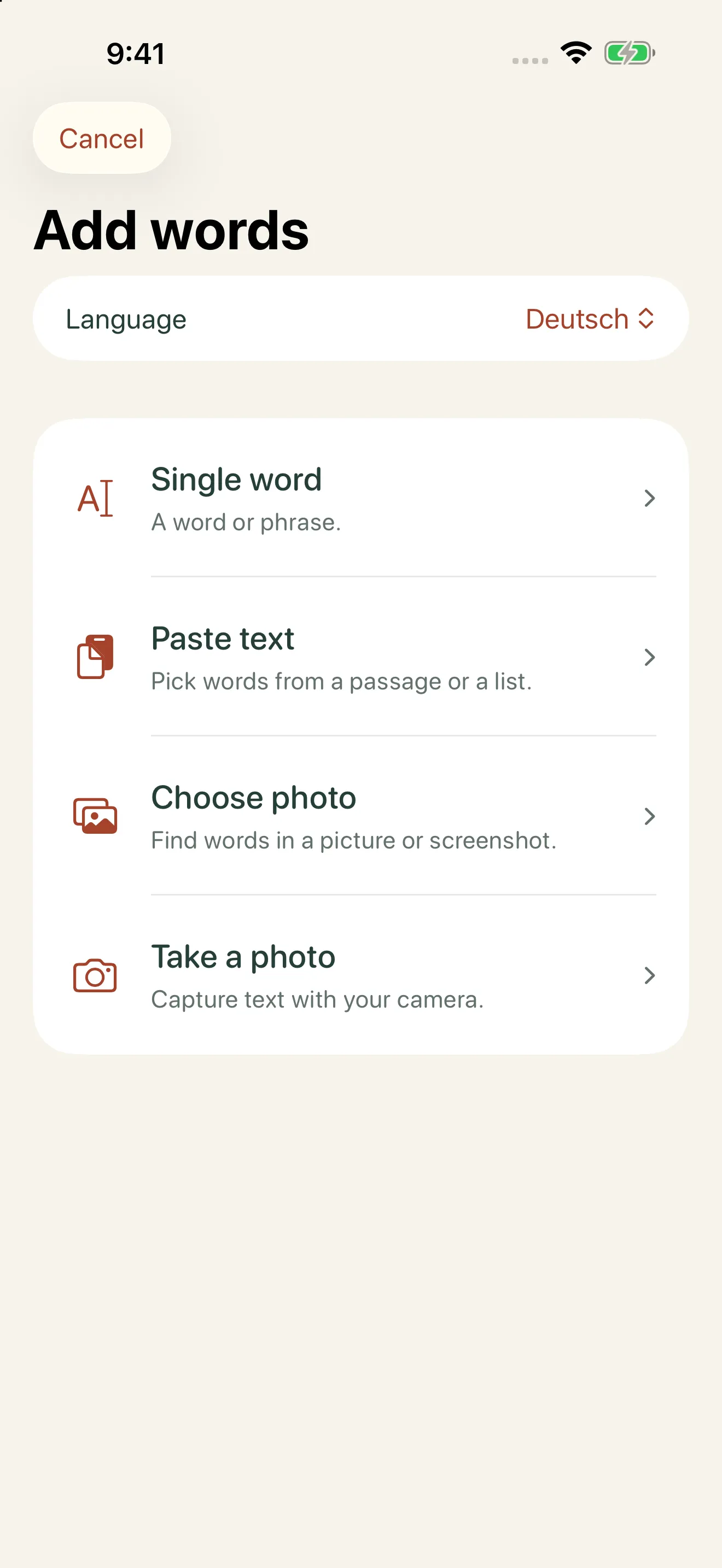
- Type the word, paste a passage, or take a photo.
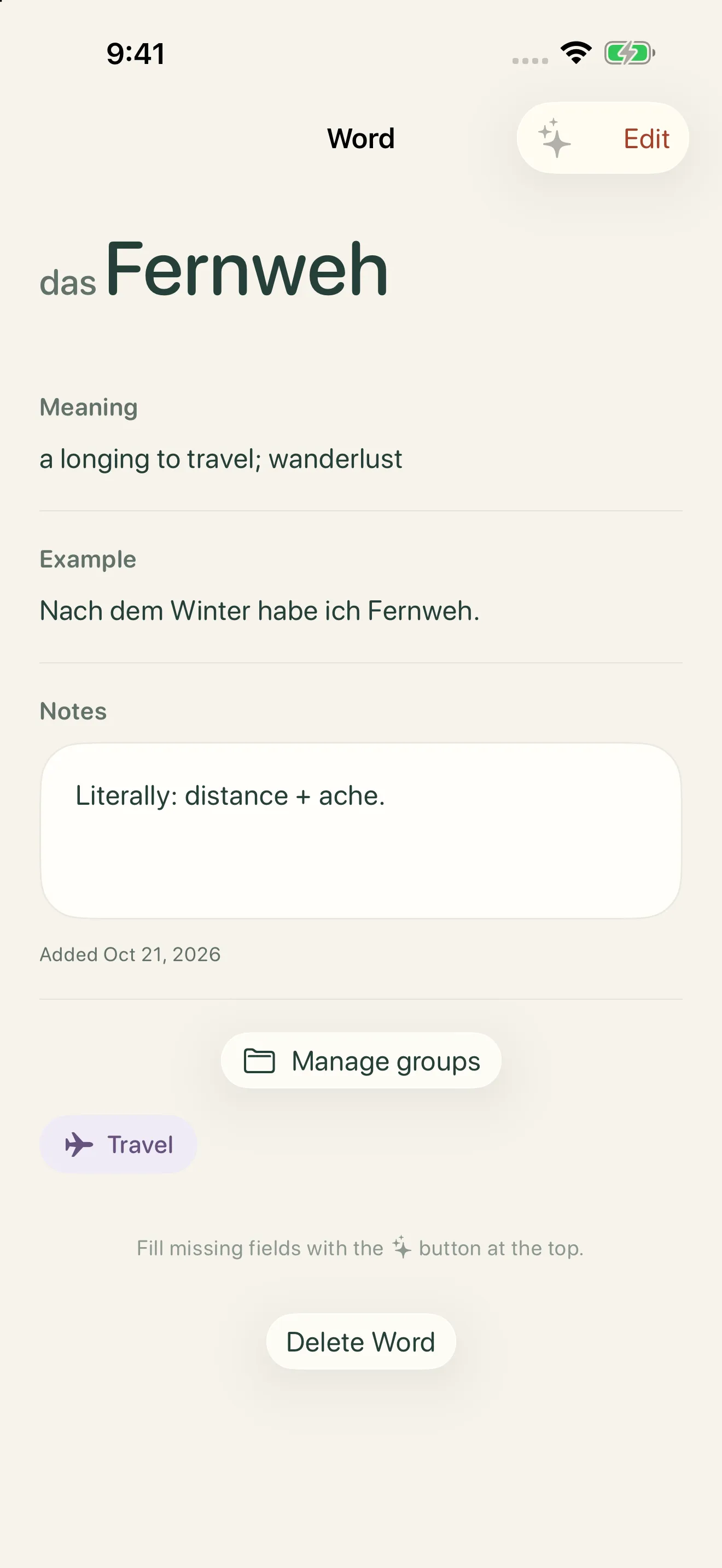
- Tap to add the meaning, reading (こもれび), and an example.
- Save it, optionally into a group like “Nature.”
In Duolingo
- Wait for the course to teach it, if it ever does.
- Or save it somewhere else.
Pasting a passage or photographing a page saves even more time. Adsonant finds the words in the text and turns them into their dictionary forms, and you choose which ones to keep.
Where Adsonant Is Better
- Adding words is fast. Save a word in seconds, or pull many at once from pasted text or a photo.
- Details are filled in for you. One tap adds the translation, an example sentence in the language you’re learning, pinyin for Chinese, hiragana for Japanese, and articles for nouns.
- Built around your words. Collect the words you actually meet, instead of only a course’s list, and keep them in one place across all six languages.
- Groups for your interests. Sort words into groups like “Travel” or “Cooking,” and review one group at a time.
- Spaced repetition and progress you can see. Adsonant schedules reviews with FSRS, and shows your total words by language, growth over time, and review history.
Where Duolingo Is Better
- Free to start. The full course is free, with ads and limits.
- A daily habit. Streaks, XP, and leagues keep you coming back.
- More than vocabulary. Lessons cover grammar, listening, and speaking too.
- More languages. Courses in 40+ languages, compared with Adsonant’s six.
- Web access. Study in a browser as well as on iPhone and Android.
Using Adsonant and Duolingo Together
Adsonant and Duolingo fit together well. Save the words you meet outside your course, in shows, books, menus, and conversations, in Adsonant, and keep your streak going in Duolingo.
Which Should You Choose?
Choose Adsonant if you…
- meet new words in books, shows, classes, or conversations
- want translations and readings added for you
- learn Chinese, French, German, Italian, Japanese, or Spanish
- use an iPhone or iPad
Choose Duolingo if you…
- are just starting a language
- want a course that decides what to learn next
- are motivated by streaks and leagues
- learn a language Adsonant doesn’t support
Frequently Asked Questions
Can you add your own words to Duolingo?
No. Duolingo teaches the vocabulary in its course. To learn words you meet elsewhere, save them in an app like Adsonant.
Can I use Adsonant and Duolingo at the same time?
Yes. Many learners use Adsonant for the words they meet in daily life and Duolingo for a structured course.
Is Adsonant free?
Adsonant is free for small collections. As your collection grows, a paid subscription keeps it growing. See the App Store listing for current plans.
Does Adsonant use spaced repetition?
Yes. Adsonant schedules reviews with FSRS, a modern spaced repetition algorithm. You can also review by group or practice your most recent words.
Does Adsonant work on Android or a computer?
Not yet. Adsonant is available for iPhone and iPad, and syncs between them with iCloud.
More Comparisons
- Anki alternative: Adsonant vs Anki
- Memrise alternative: Adsonant vs Memrise
- Quizlet alternative: Adsonant vs Quizlet
- Pleco alternative: Adsonant vs Pleco
- LingQ alternative: Adsonant vs LingQ
See all of them in our guide to the best vocabulary apps for language learners, or grab a free word list to get started.

Smart vocab tracking with Adsonant